QB
QuickBooks Online
Accounting & Bookkeeping · Solo · mid
The dominant US small-business ledger — the book of record most firms work from.
| Category | Accounting & Bookkeeping |
|---|---|
| Best for | Solo · mid firms |
| Pricing | From $35/mo |
| Integration | Open API |
| Official site | quickbooks.intuit.com |
How it connects. It offers a self-serve public API, so it is among the easiest tools here to connect to. Compare every tool by integration openness →
QuickBooks Online pros and cons
Pros
- The de facto US small-business ledger — client familiarity is the moat no competitor has cracked
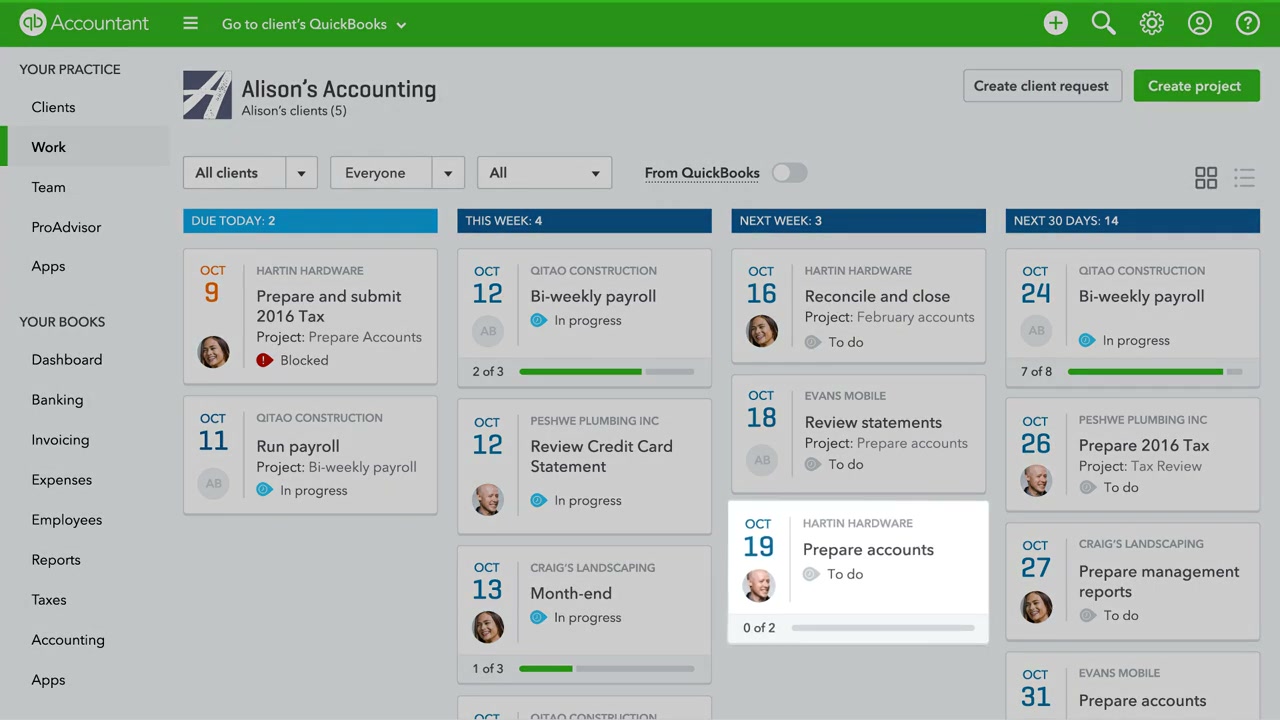
- Deepest accountant channel in the market: QuickBooks Online Accountant, ProAdvisor program, books-to-tax into Intuit tax products
- Enormous app ecosystem and a genuinely open developer API
- Continuous feature investment at market-leader scale
Cons
- Per-client subscription economics add up across a large client base, with recurring price increases
- Feature churn and UI changes generate steady retraining friction
- Advanced accounting needs (multi-entity, heavy inventory) strain it
- Support quality at the standard tiers is a common complaint
Who QuickBooks Online is for — real-world scenarios
The firm that meets clients where they are
Most US small-business clients arrive already on QBO. Standardizing the practice on it converts client familiarity into workflow leverage.
The books-to-tax Intuit pipeline
QBOA books flowing into ProConnect or Lacerte returns keeps the busiest data path in the firm inside one vendor’s rails.
Bottom line
The default ledger for US practices, chosen as much by clients as by firms. Manage the subscription economics deliberately; the ecosystem and client familiarity are why it stays the center of gravity.